


 All orders







Chemical vs Mineral Sunscreen: Which Suits Your Skin?
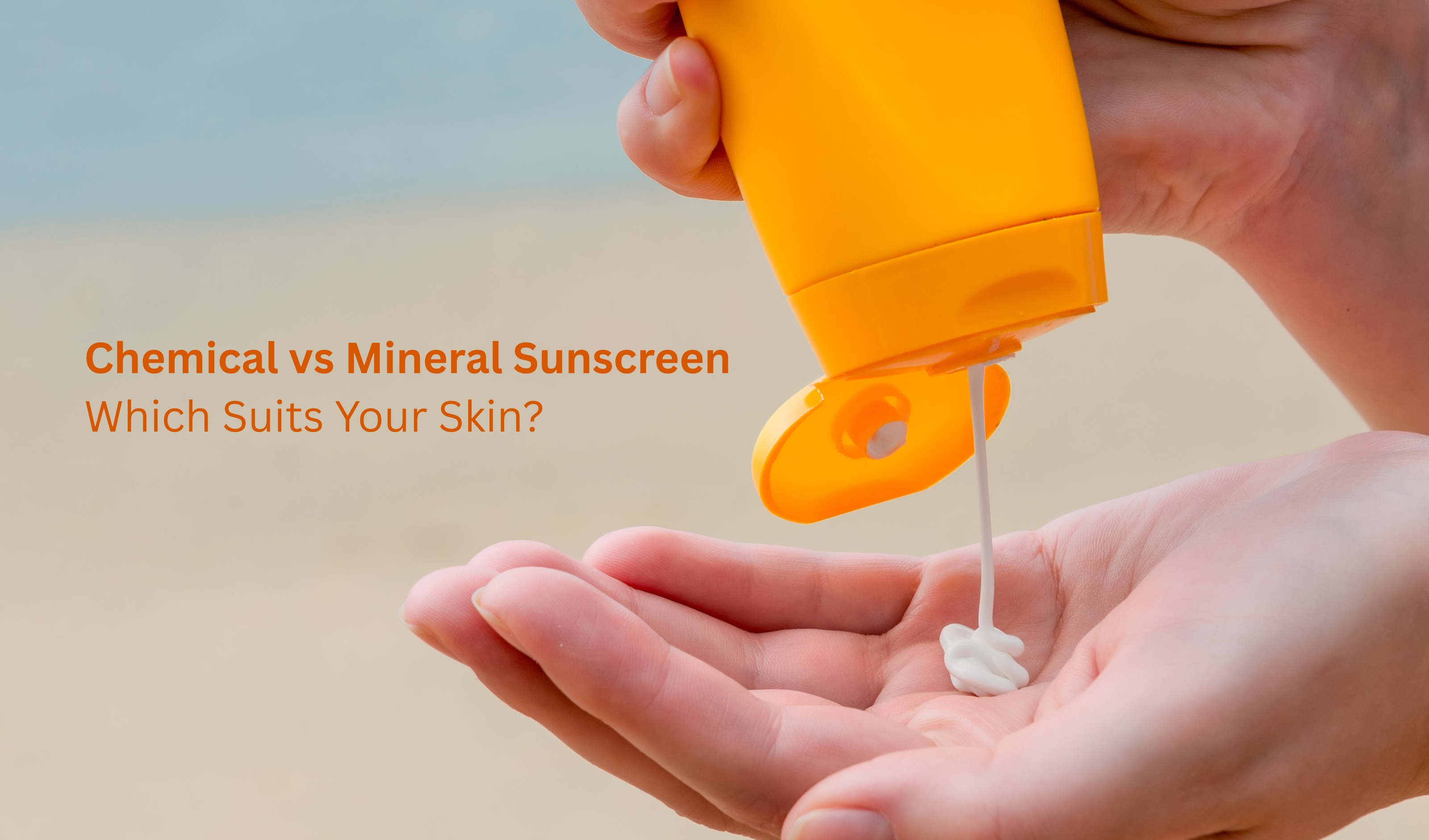
You know sunscreen is essential. But standing in the skincare aisle, you're faced with a confusing choice. Chemical or mineral? Physical or organic? The labels don't make it easier. Understanding the chemical vs mineral sunscreen debate helps you choose protection that actually works for your skin.
Both types block UV rays effectively. The difference lies in how they work, how they feel, and how your skin reacts to them. Let's break down everything you need to know to make the right choice.
How Chemical Sunscreen Works
Chemical sunscreens contain organic compounds that absorb UV radiation. When UV rays hit your skin, these filters absorb the energy and convert it to heat, which then dissipates harmlessly.
Common chemical filters include avobenzone, oxybenzone, octinoxate, and homosalate. These ingredients blend invisibly into skin, leaving no white residue. They tend to feel lightweight and work well under makeup.
Chemical sunscreens need about 15 to 20 minutes to become effective after application. The filters must absorb into your skin before they can protect you. They also break down faster with sun exposure, requiring more frequent reapplication.
How Mineral Sunscreen Works
Mineral sunscreen, also called physical sunscreen, uses inorganic compounds that sit on top of your skin. Instead of absorbing UV rays, these filters reflect and scatter them away from your skin like tiny mirrors.
Only two ingredients qualify as mineral filters: zinc oxide and titanium dioxide. Both provide broad-spectrum protection. Zinc oxide protects against the full UVA and UVB spectrum, while titanium dioxide is slightly better at blocking UVB rays.
Mineral sunscreen for the face works immediately upon application. There's no waiting period because the protection is physical, not chemical. These formulas also tend to be more stable and don't break down as quickly in sunlight.
The Key Differences at a Glance
Understanding the difference between physical and chemical sunscreen helps you match protection to your needs.
Chemical sunscreens absorb UV rays while mineral sunscreens reflect them. Chemical formulas blend invisibly but require activation time. Mineral formulas work instantly but can leave a white cast on deeper skin tones. Modern formulations have improved significantly, with many mineral sunscreens now offering sheer, lightweight finishes.
When it comes to skin feel, chemical sunscreens are typically thinner and absorb quickly. Mineral sunscreens can feel thicker, though newer versions use micronised particles for better texture. For sensitive or reactive skin, mineral sunscreen for the face is generally the safer choice.
Which Is Better for Your Skin Type?
The mineral or chemical sunscreen choice depends largely on your skin's specific needs.
Sensitive Skin
Mineral sunscreen wins here. Chemical filters can cause stinging, redness, and allergic reactions in reactive skin. Zinc oxide and titanium dioxide are gentler and less likely to irritate. They also have natural soothing properties that benefit sensitive complexions.
Oily and Acne-Prone Skin
Both types can work, but choose carefully. Some chemical sunscreens feel lighter, which oily skin appreciates. However, certain chemical filters can trigger breakouts. Look for non-comedogenic formulas regardless of type. Many people with acne-prone skin actually prefer zinc oxide, which has mild antibacterial properties.
Dry Skin
Chemical sunscreens often contain hydrating ingredients that dry skin welcomes. Mineral sunscreens can sometimes emphasise dry patches. If you prefer mineral protection, ensure your skincare routine includes proper hydration beforehand. Layer a good serum like the COSRX Advanced Snail 96 Mucin Power Essence under your sunscreen.
Darker Skin Tones
The white cast from mineral sunscreens has historically been a problem. Modern tinted mineral formulas solve this issue beautifully. Look for mineral sunscreens with iron oxides that blend into deeper complexions without ashy residue.
Considerations for the Indian Climate
India's humid weather affects how sunscreen performs. Heavy formulas feel uncomfortable and can slide off with sweat.
According to the Indian Journal of Dermatology, Indian skin requires particular attention to both UV protection and hyperpigmentation prevention. Chemical sunscreens may feel more comfortable in humidity, but mineral sunscreens offer better stability in heat.
For humid conditions, look for water-resistant formulas regardless of type. Gel-based chemical sunscreens absorb quickly without heaviness. Lightweight mineral sunscreens with silica help control shine throughout the day.
Application Tips for Best Protection
How you apply sunscreen matters as much as which type you choose.
Use enough product. Most people underapply, dramatically reducing protection. For your face, aim for about half a teaspoon. Apply to clean, moisturised skin. A good toner and moisturiser create a smooth base.
Chemical sunscreens need 15 to 20 minutes before sun exposure. Mineral sunscreens work immediately. Both types require reapplication every two hours during sun exposure, or immediately after swimming or sweating.
Don't forget often-missed areas like ears, neck, and hairline. These spots show sun damage and aging just as much as your face.
Can You Combine Both Types?
Many modern sunscreens blend chemical and mineral filters. These hybrid formulas offer the cosmetic elegance of chemical sunscreens with the gentle, stable protection of mineral filters. They're a good middle ground if you want benefits from both categories.
If you layer separate products, apply mineral sunscreen as your final skincare step. Chemical sunscreen goes on before mineral sunscreen if you're using both, allowing the chemical filters to absorb properly.
Kind Choices for Sun Protection
At Kindlife, we understand that sun protection is personal. Our curated skincare collection features gentle cleansers, hydrating serums, and barrier-supporting products that prep your skin for comfortable sunscreen application.
Build a routine that makes daily sun protection effortless.
FAQs
What is mineral sunscreen?
Mineral sunscreen uses zinc oxide or titanium dioxide to physically block UV rays. These ingredients sit on top of your skin and reflect radiation away rather than absorbing it as chemical filters do.
What is physical sunscreen?
Physical sunscreen is another name for mineral sunscreen. Both terms refer to formulas using zinc oxide or titanium dioxide that create a physical barrier against UV rays on your skin's surface.
What are the different types of sunscreen?
- Chemical sunscreens absorb UV rays using organic compounds like avobenzone
- Mineral sunscreens reflect UV rays using zinc oxide or titanium dioxide
- Hybrid sunscreens combine both chemical and mineral filters
Do dermatologists prefer chemical or mineral sunscreen?
- For sensitive, reactive, or acne-prone skin, most dermatologists recommend mineral.
- For daily cosmetic use, either type works when properly formulated
- The best sunscreen is the one you'll actually use consistently
Which is the longest-lasting sunscreen?
Mineral sunscreens are more photostable, meaning they don't break down as quickly in sunlight. However, all sunscreens require reapplication every two hours during sun exposure, regardless of type.
-
 Free shipping on
orders above ₹699 -
 5 days
easy returns -
 100% authentic,
direct sourcing -
 2M+ units sold
Have you been kind to yourself today?
Download now, we App-solutely recommend it


Keep up with kindlife
Whatsapp us on +918130287724 to get in touch. Reach out to us from 10AM - 6PM (Mon-Sat), we take a break on weekends (hi boss!)
© 2025 AlphaCMA Private LIMITED. All Rights Reserved.


